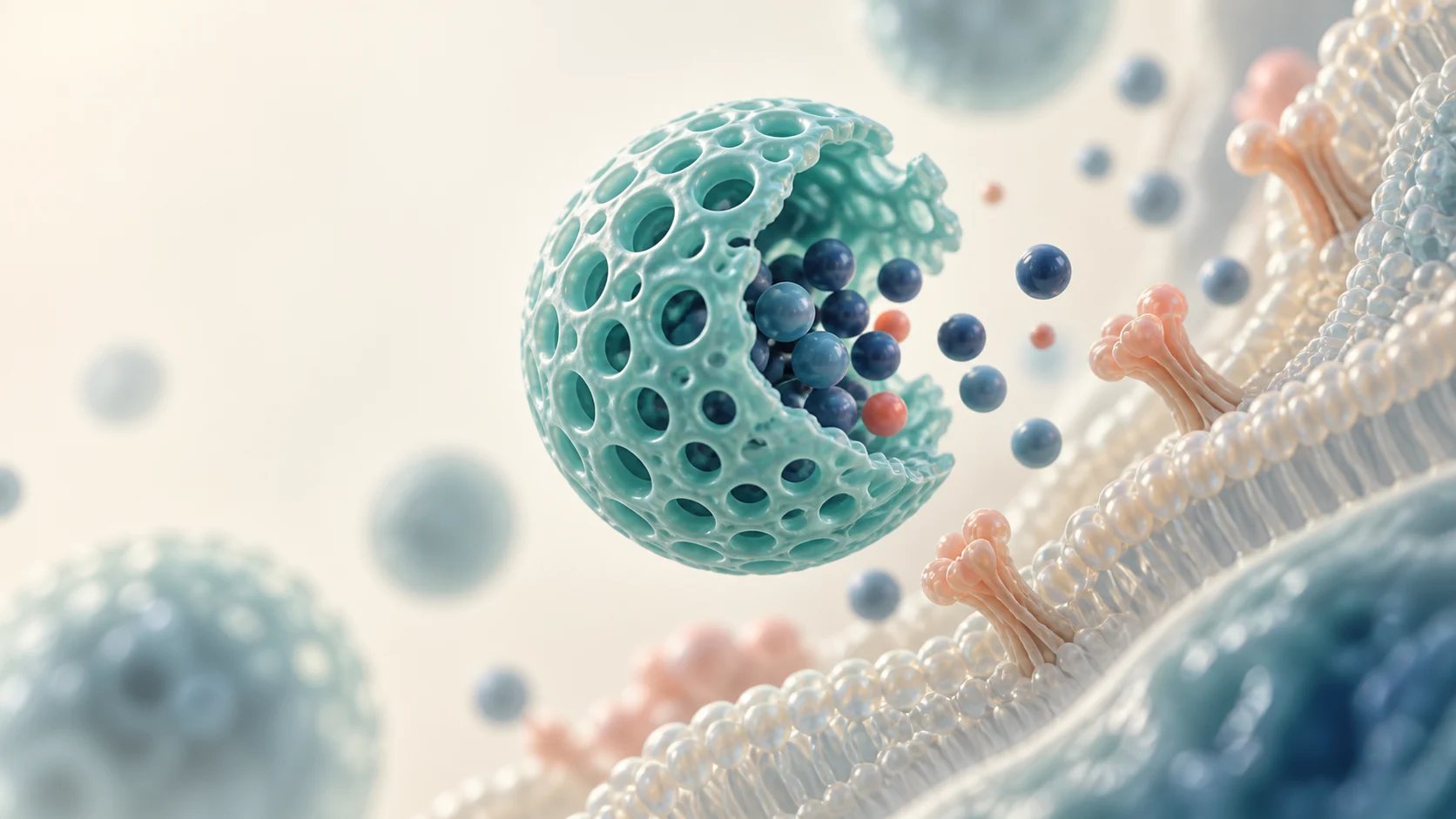
A collaboration with Guilong Zhang at Binzhou Medical University combines cuproptosis, cGAS–STING activation and MRI in preclinical melanoma research.
pLCGM-OVA packages CuGdMn nanoclusters and ovalbumin in liposomes and uses acidic conditions to trigger degradation.
ROS-related effects, cuproptosis and manganese-mediated cGAS–STING activation coordinate immunogenic cell death and antigen presentation.
The reported results come from cells and animal models and remain preclinical.
Related publications
Biodegradable nano-immune agonist for enhanced immunotherapy of melanoma via the synergistic action of cuproptosis and cGAS-STING enhanced immune response
Research notes, full authors and sources
Question: How can biodegradable carriers connect cuproptosis with immune activation?
Design and findings: A collaboration with Guilong Zhang at Binzhou Medical University combines cuproptosis, cGAS–STING activation and MRI in preclinical melanoma research.
Scope: This is preclinical cell and animal research in collaboration with Guilong Zhang at Binzhou Medical University, not an approved clinical therapy.
Authors: Qingdong Li; Yuanyuan Cui; Zhenhong Xia; Wenjuan Gao; Jianmin Xiao; Zhen Zhao; Lei Yang; Guilong Zhang; Zhengyan Wu
Online publication: 2025-03-15