PEOPLE & COLLABORATION

People and collaboration

Meet the people behind our questions, materials and research.

Faculty

Jia Zhang

Jia Zhang

张嘉

Associate Researcher · Master’s Supervisor

Degree
Ph.D.
Research
Multifunctional pesticide adjuvants, responsive carriers and foliar delivery
Postdoctoral research
University of Science and Technology of China; Johns Hopkins University
Publications and sources
  1. Carbon dot-stabilized and coordination-gated nanocarriers enable rainfast foliar iron deliveryCarbon · 2026
  2. Bioinspired prussian blue nanopesticides with triple-stimuli-responsive gates for ecology-adaptive pest managementJournal of Controlled Release · 2025
  3. Spherical Assembly of Halloysite Clay Nanotubes as a General Reservoir of Hydrophobic Pesticides for pH‐Responsive Management of Pests and WeedsSmall · 2024

Postdoctoral Researchers

Guopeng Teng

Guopeng Teng

滕国鹏

Postdoctoral Researcher

Education

  1. 2023.09—2026.06

    University of Science and Technology of China · Doctoral studies in Materials and Chemical Engineering

  2. 2020.09—2023.06

    University of Science and Technology of China · Master’s studies in Materials Physics and Chemistry

  3. 2016.09—2020.06

    Hefei University of Technology · Undergraduate studies in Pharmaceutical Engineering

Research
Stimuli-responsive pesticide delivery and controlled release; Nanocarrier self-assembly and foliar interface engineering; Rainfast foliar iron delivery
Profile
Works on functional nanomaterials for agriculture, focusing on stimuli-responsive pesticide delivery, foliar retention and nutrient transport. His studies include coordination-directed halloysite nanotube assemblies, triple-responsive Prussian-blue pesticide carriers, and carbon-dot-stabilized, coordination-gated nanocarriers for rainfast foliar iron delivery.
Selected work
First-author studies in Carbon, Journal of Controlled Release and Small.
Publications and sources
  1. Carbon dot-stabilized and coordination-gated nanocarriers enable rainfast foliar iron deliveryCarbon · 2026
  2. Bioinspired prussian blue nanopesticides with triple-stimuli-responsive gates for ecology-adaptive pest managementJournal of Controlled Release · 2025
  3. Spherical Assembly of Halloysite Clay Nanotubes as a General Reservoir of Hydrophobic Pesticides for pH‐Responsive Management of Pests and WeedsSmall · 2024
Bo Hu

Bo Hu

胡博

Postdoctoral Researcher · Research Assistant · Laboratory Safety Administrator

Education

  1. 2017.09—2024.09

    Hefei University of Technology · Geology (integrated master’s and doctoral studies)

Research areas · Geology
Reconstruction of sedimentary paleoenvironments and paleogeography; carbonate petrology; isotope geochemistry; identification and analysis of microfossils.
Research areas · Environmental science
Modification of nanominerals; porous materials for uranium extraction from seawater; functional nanocarriers and foliar nutrient delivery systems.
Research profile · Geology
Reconstructs sedimentary paleoenvironments and paleogeography during key geological intervals. The research combines carbonate petrology, isotope geochemistry and microfossil analysis, including conodonts, to investigate sedimentary basin evolution, changes in ancient ocean chemistry, and the relationships among tectonics, sedimentation and paleoenvironments.
Research profile · Environmental science
Builds on mineralogy to develop modified nanominerals and porous materials. The work investigates adsorbents for uranium extraction from seawater, focusing on adsorption mechanisms for trace uranyl ions, resistance to interference and potential for reuse. It also develops functional nanocarriers and foliar nutrient delivery systems to improve nutrient utilization for green, precision agriculture.
Selected research outputs
Geological research has appeared in Gondwana Research, Precambrian Research, Journal of Palaeogeography, Journal of Micropalaeontology, Facies, International Geology Review and Geological Journal. Environmental research has appeared in materials and chemistry journals including Carbon, Small and ChemCatChem.
Publications and sources
  1. Carbon dot-stabilized and coordination-gated nanocarriers enable rainfast foliar iron deliveryCarbon · 2026
  2. Engineering Mass‐Transfer‐Optimized Lamellar Structures for Enhanced Uranium Extraction From SeawaterSmall · 2026

Graduate Students

Hongjian Ge

Hongjian Ge

葛鸿渐

Doctoral Student · 2024 Entry Cohort

Education

  1. 2021.09—present

    University of Science and Technology of China · Materials Physics and Chemistry (integrated master’s and doctoral studies, ongoing)

  2. 2017.09—2021.06

    Anhui Jianzhu University · Polymer Materials and Engineering (Bachelor of Engineering)

Research areas
Electrocatalysis for energy applications.
Related research outputs
Published work covers heavy-metal immobilization, iron-based carbon materials for cadmium removal and uranium extraction from seawater. First author of the study on nanoscale galvanic systems for immobilizing diverse heavy-metal ions.
Publications and sources
  1. Photo-induced protonation assisted nano primary battery for highly efficient immobilization of diverse heavy metal ionsJournal of Hazardous Materials · 2024
  2. Synthesis of Iron-Based Carbon Microspheres with Tobacco Waste Liquid and Waste Iron Residue for Cd(II) Removal from Water and SoilLangmuir · 2022
  3. Engineering Mass‐Transfer‐Optimized Lamellar Structures for Enhanced Uranium Extraction From SeawaterSmall · 2026
Xueqi Ma

Xueqi Ma

马雪琦

Doctoral Student · Year 2

Education

  1. 2025.09—present

    University of Science and Technology of China · Materials and Chemical Engineering (doctoral studies, ongoing)

  2. 2022.09—2025.06

    University of Science and Technology of China · Materials Physics and Chemistry (master’s studies)

  3. 2018.09—2022.06

    Hefei University of Technology · Polymer Materials and Engineering (undergraduate studies)

Research areas
Stimuli-responsive pesticide delivery and precise controlled release; photocatalytic hydrogen peroxide production using covalent organic frameworks and uranium extraction from seawater.
Research profile · Master’s studies
During her master’s studies, she focused on agricultural functional materials and smart pesticide formulations. She combined attapulgite, photothermal materials and carboxymethyl cellulose hydrogels to construct near-infrared-responsive pesticide delivery systems, using nonuniform photothermal and stress fields to induce rupture of the coating for on-demand pesticide release and precise delivery.
Research profile · Doctoral studies
Her doctoral research focuses on photocatalytic hydrogen peroxide production using covalent organic frameworks (COFs) and uranium extraction from seawater. The research investigates how nitrogen-containing active sites, conjugated structures, band positions and pore environments can be tuned to promote oxygen activation and in situ H₂O₂ generation, with the aim of driving selective enrichment, mineralization-induced precipitation and recovery of trace uranyl ions from seawater.
Selected achievements
During her master’s studies, she published one first-author research paper in Chemical Engineering Journal and filed three patent applications concerning stimuli-responsive pesticide delivery, smart controlled-release materials, and their preparation and applications.
Publications and sources
  1. Spherical Assembly of Halloysite Clay Nanotubes as a General Reservoir of Hydrophobic Pesticides for pH‐Responsive Management of Pests and WeedsSmall · 2024
  2. Bioinspired prussian blue nanopesticides with triple-stimuli-responsive gates for ecology-adaptive pest managementJournal of Controlled Release · 2025
  3. Engineering Mass‐Transfer‐Optimized Lamellar Structures for Enhanced Uranium Extraction From SeawaterSmall · 2026
Xue Yuan

Xue Yuan

袁雪

Doctoral Student · Year 2

Education

  1. 2022.09—present

    University of Science and Technology of China · Materials Physics and Chemistry (doctoral studies, ongoing)

  2. 2018.09—2022.06

    School of Life Sciences, Anhui Medical University · Bachelor of Science

Research areas
Prussian-blue nanozymes; functionalized nanoclays and pesticide adjuvants.
Research profile
Her research explores functional nanomaterials for biomedical and agricultural applications. She has contributed to collaborative studies of manganese-based Prussian-blue nanomaterials for the treatment of inflammatory bowel disease, and of mesoporous silica as pesticide carriers integrating antioxidant functions and fertilizer delivery. Her current focus is on functionalized clay materials for reducing pesticide use while improving efficacy, by enhancing deposition and retention on crop leaves to limit losses and using material functionalization to improve pesticide utilization and pest control.
Publications and sources
  1. Carbon dot-stabilized and coordination-gated nanocarriers enable rainfast foliar iron deliveryCarbon · 2026
  2. Spherical Assembly of Halloysite Clay Nanotubes as a General Reservoir of Hydrophobic Pesticides for pH‐Responsive Management of Pests and WeedsSmall · 2024
  3. Scale‐Up Preparation of Manganese‐Iron Prussian Blue Nanozymes as Potent Oral Nanomedicines for Acute Ulcerative ColitisAdvanced Healthcare Materials · 2024
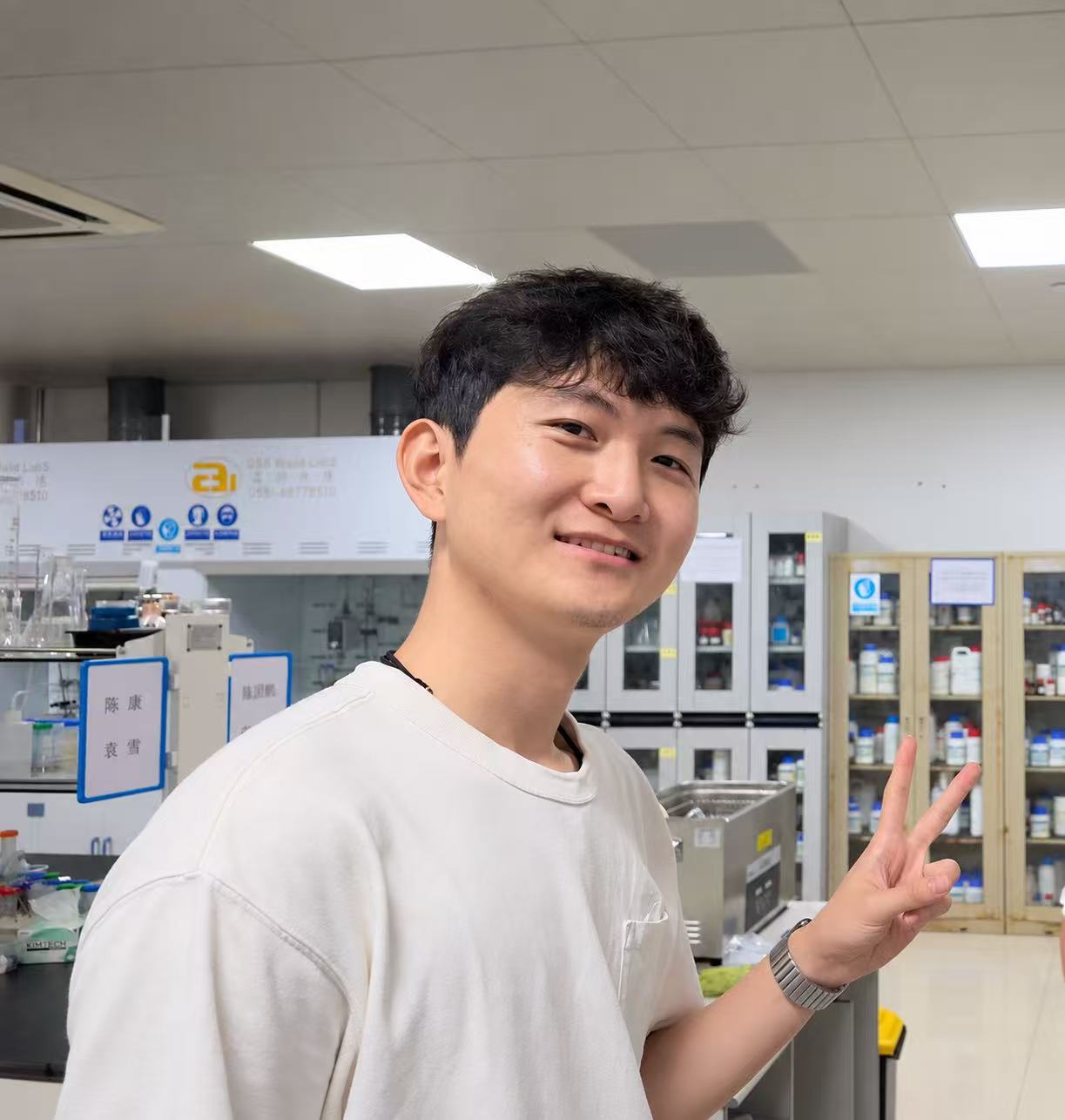
Yue Zhang

Yue Zhang

张越

Doctoral Student · 2026 Entry Cohort

Education

  1. 2026.09—present

    University of Science and Technology of China · Electronic Information, with a focus on Biomedical Engineering (doctoral studies, ongoing)

  2. 2015.09—2018.06

    Anhui Medical University · Master’s degree in Clinical Stomatology

  3. 2010.09—2015.06

    Anhui Medical University · Bachelor’s degree in Stomatology
Research areas
Nanomaterial-based electrochemical sensors for detecting biomarkers of oral diseases.
Research profile
Research focuses on engineering applications of nanomaterials in oral medicine, particularly the development of nanomaterial-based electrochemical sensors for rapid detection of oral pathogens, inflammatory factors and other biomarkers in saliva and gingival crevicular fluid. The work explores nano-interface engineering and signal amplification to improve sensor sensitivity, selectivity and stability, with the aim of supporting early screening and treatment monitoring for dental caries, periodontitis and other oral diseases, and advancing research toward clinical translation of oral point-of-care testing.
Qi Wang

Qi Wang

王琦

Doctoral Student · 2026 Entry Cohort

Education

  1. Ongoing

    University of Science and Technology of China · Materials Science and Engineering (doctoral studies, ongoing)

  2. 2018.09—2022.06

    Xi’an University of Technology · Bachelor of Engineering in Materials Physics

Research areas
Selective electrocatalytic oxidation of alkenes.
Research profile
Focuses on electrocatalytic epoxidation of small molecules such as propylene. Through the design of metal–organic framework (MOF) materials, the research investigates structure–activity relationships linking catalyst structures, reactive interfacial species and reaction pathways.
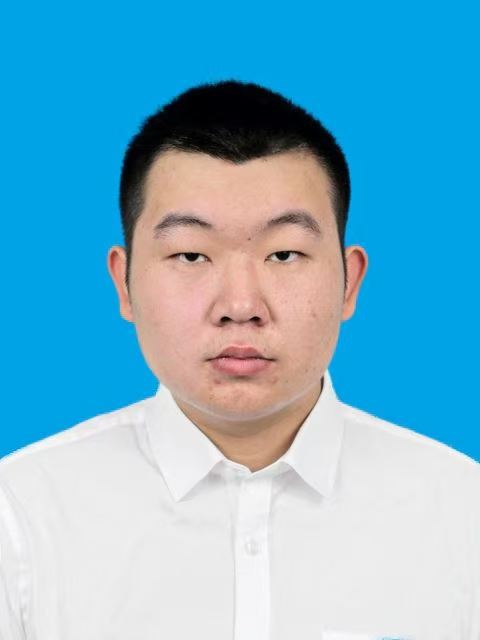
Yun Zhang

Yun Zhang

张云

Master’s Student · 2024 Entry Cohort

Education

  1. 2024.09—present

    University of Science and Technology of China · Materials and Chemical Engineering (master’s studies, ongoing)

  2. 2020.09—2024.07

    East China University of Science and Technology · Polymer Materials and Engineering (Bachelor of Engineering)
Research areas
Mechanisms of nanomaterial-mediated enhancement of herbicide efficacy.
Research profile
Investigates how nanomaterials regulate foliar deposition, wetting, uptake and translocation of herbicides. The work seeks to clarify how these materials improve interfacial behavior, increase bioavailability and influence metabolic pathways, and to uncover the physiological and molecular mechanisms underlying their synergistic effects with herbicides. The aim is to provide a theoretical basis for reducing herbicide use while improving efficacy and supporting greener applications.
Yunhao Zhang

Yunhao Zhang

张运昊

Jointly Trained Master’s Student · 2024 Entry Cohort

Education

  1. 2024.09—present

    Anhui University · Biology (master’s studies, ongoing)

  2. 2017.09—2021.06

    Zhejiang Chinese Medical University · Bachelor of Science

Research areas
Interdisciplinary research in smart agriculture.
Research profile
Studies the mechanisms and applications of nanomaterial-mediated regulation of plant stress tolerance.
Zhengyu Li

Zhengyu Li

李政谕

Master’s Student · 2025 Entry Cohort

Education

  1. 2025.09—present

    University of Science and Technology of China · Master’s studies, ongoing

  2. 2021.09—2025.06

    Nanjing University of Information Science and Technology · Bachelor of Science

Research areas
Electrocatalysis.
Research profile
Develops electrocatalytic anode materials for the chlor-alkali industry and investigates their mechanisms.
Linhui Zheng

Linhui Zheng

郑琳蕙

Master’s Student · 2025 Entry Cohort

Education

  1. 2025.09—present

    University of Science and Technology of China (Hefei Institutes of Physical Science) · Biology (academic master’s studies, ongoing)

  2. 2021.09—2025.06

    College of Food Science and Technology, Huazhong Agricultural University · Bachelor of Engineering

Research areas
Research at the intersection of materials science and agricultural science.
Research profile
Explores applications of novel functional materials in plant protection to support green and sustainable agricultural development.
Jingrong Xia

Jingrong Xia

夏静蓉

Master’s Student · 2025 Entry Cohort

Education

  1. 2025.09—present

    University of Science and Technology of China · Materials and Chemical Engineering (master’s studies, ongoing)

  2. 2021.09—2025.06

    Anhui University · New Energy Materials and Devices (Bachelor of Engineering)

Research areas
Hydrogen peroxide production through the electrocatalytic two-electron oxygen reduction reaction.
Research profile
The research addresses the high energy demand, process complexity, and storage and transport safety issues associated with the conventional anthraquinone process. It focuses on designing electrocatalytic materials with high activity, selectivity and stability, with the aim of efficiently producing hydrogen peroxide from oxygen and water at ambient temperature and pressure. It also explores coupling with renewable energy and the potential for in situ, on-demand and decentralized production, contributing to approaches for greener, lower-carbon hydrogen peroxide manufacturing.
Zhixin Yuan

Zhixin Yuan

袁志鑫

Master’s Student · 2025 Entry Cohort

Education

  1. 2025.09—present

    University of Science and Technology of China · Materials and Chemical Engineering (master’s studies, ongoing)

  2. 2021.09—2025.06

    University of Jinan · Bachelor’s degree

Research areas
Theranostic stents for luminal applications.
Research profile
The research focuses on integrated diagnosis and treatment of luminal tumors. It investigates stents as carriers for functional materials, aiming to combine local tumor treatment with in situ diagnostic imaging.
Zijun Liu

Zijun Liu

刘子骏

Jointly Trained Master’s Student · 2025 Entry Cohort

Education

  1. 2025.09—present

    Nanjing Forestry University · Power Engineering and Engineering Thermophysics (master’s studies, ongoing)

  2. 2021.09—2025.06

    Nanjing Forestry University · Energy and Power Engineering

Research areas
Metal–organic framework design and chlorine evolution; bimetal-loaded carbon materials for the hydrogenation of nitroarenes to amines.
Research profile · Metal–organic frameworks
The research investigates structural design and functionalization of metal–organic frameworks, including the introduction of titanium into the metal nodes of iron-based frameworks. It aims to improve stability in acidic environments and explores their use as anodic catalysts for the chlorine evolution reaction.
Research profile · Carbon-based catalysts
The research studies the preparation of transition-metal-loaded carbon materials, examines how bimetallic interactions affect catalytic performance, and explores their application to the hydrogenation of nitroarenes to amines.
Yichen Li

Yichen Li

李亦宸

Master’s Student · 2026 Entry Cohort

Education

  1. 2026.09—present

    University of Science and Technology of China · Materials Physics and Chemistry (master’s studies, ongoing)

  2. 2022.09—2026.06

    College of Food Science and Engineering, Tianjin University of Science and Technology · Bachelor’s degree

Research areas
Nanomaterial pesticide carriers and nanoclay-based pesticide delivery systems.
Research profile
The research focuses on the preparation and application of functional nanoclay-based composites. It explores their potential for efficient pesticide delivery and improved efficacy at reduced application rates, aiming to provide a theoretical and experimental basis for new environmentally considerate pesticide formulations.

Alumni

Bowen Shen

Bowen Shen (Prized Student)

沈博文

Alumnus · 2022 Entry Cohort

Research areas
Electrochemical sensing and trace-antibiotic detection
Profile
First author of two studies on ultrasensitive chloramphenicol detection using CoFe-MOFs/MXene sensing electrodes and multilevel signal amplification, with additional collaborative work on responsive pesticide delivery.
Publications and sources
  1. Facile fabrication of sensing electrode based on CoFe-MOFs/MXene for ultrasensitive detection of picomolar chloramphenicolTalanta · 2025
  2. Picomolar chloramphenicol detection by orchestrating multi-level signal systems of metal-organic frameworks-catalytic hairpin assembly-gold nanoprobesTalanta · 2026
  3. Bioinspired prussian blue nanopesticides with triple-stimuli-responsive gates for ecology-adaptive pest managementJournal of Controlled Release · 2025

Biao Hong

洪彪

Alumnus · 2020 Entry Cohort

Research areas
Nanobiomedical materials and functional-material sensing
Profile
Coauthored work covers Prussian-blue nanozymes and ultrasensitive chloramphenicol detection.
Publications and sources
  1. Scale‐Up Preparation of Manganese‐Iron Prussian Blue Nanozymes as Potent Oral Nanomedicines for Acute Ulcerative ColitisAdvanced Healthcare Materials · 2024
  2. Facile fabrication of sensing electrode based on CoFe-MOFs/MXene for ultrasensitive detection of picomolar chloramphenicolTalanta · 2025
  3. Picomolar chloramphenicol detection by orchestrating multi-level signal systems of metal-organic frameworks-catalytic hairpin assembly-gold nanoprobesTalanta · 2026
Xinyue Guo

Xinyue Guo

郭欣悦

Former Student

Education

  1. 2019.09—2025.06

    University of Science and Technology of China · Materials Physics and Chemistry (integrated master’s and doctoral program)

  2. 2015.09—2019.06

    Fujian Agriculture and Forestry University · Yan Jiaxian Agronomy Innovation Class (undergraduate studies)

Research areas
Electrochemical sensor development and pollutant remediation.
Research profile
Research has focused on electrochemical sensors and pollutant remediation. It investigates sensing interfaces based on nanomaterials such as MXenes, metal–organic frameworks (MOFs) and Prussian-blue analogues, combining catalytic hairpin assembly and nanoprobes for signal amplification in the sensitive detection of disease biomarkers in bodily fluids and pollutants in water. Related work also investigates nanoscale zero-valent iron/conductive carbon coating galvanic systems for cadmium removal from water.
Post-graduation position
Engineer, Institute of Special Glass Fiber and Optoelectronic Functional Materials, China Building Materials Academy Co., Ltd.
Current work
Micro- and nanofabrication process development and device development.

Collaborations documented in public reports

BIOMEDICINE · 2025

Collaboration with Binzhou Medical University

An institutional report describes work with Guilong Zhang’s team at Binzhou Medical University, combining biodegradable nanomaterials, cuproptosis and immune signaling in preclinical melanoma models.

ACADEMIC EXCHANGE · 17 JULY 2026

Sharing research experience

At an Institute of Intelligent Machines dialogue, Wu shared experience in selecting research questions, long-term work and teamwork with students and early-career colleagues.

Join Us →